Monday, 21 October 2019

CMM#11 Released

Issue 11 of the Civ Modding Monthly has been released.

September 2019

In this issue, we take an extended and self-reflective look at some of the recent civ mods to have been released. Deliverator also embarks on his first part in a series aiming to look at the way in which the natural world is depicted in the civ series. And we speak with the modders that made the 12 Days of Africa about their experiences.

CMM_Issue11_Sep2019.pdf

Friday, 18 October 2019

Historical Spotlight: The Balkan Wars

Written by Lime


Hi lads, the weekend has come once again, and why not play a game of civilization to represent it? Particularly, in this day in history - 18 October 1912 - Peter I of Serbia issued a declaration that began the first Balkan War. This tumultuous conflict was the first round in 20th-century warfare in the Balkans, setting the stage for the Second Balkan War, which was one of many factors that lead to World War One.

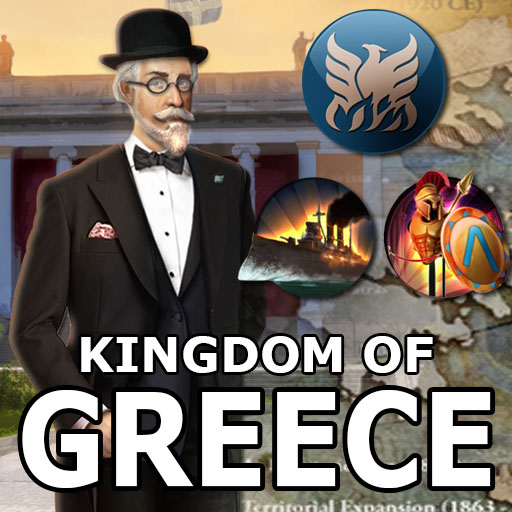
For this occasion, we have a great multitude of mods! The sides in this conflict: the Balkan League consisting of the combined forces of Greece, Serbia, Bulgaria, and Montenegro, against the ageing but not-quite-dead-yet Ottoman Empire, each have their own mods to play, but let's start with the Greeks. For this, we've got Urdnot's Kingdom of Greece under Venizelos, for Sid Meier's Civilization V. Venizelos was the original architect of this Balkan League, seeing it as the best way to ensure that Greece could both reform its army and defeat the Turks at the same time.

Saturday, 12 October 2019

Briefly, On the 'What-Ifs' of Mods

Written by JFD


Civ is often spoken about in terms of being a historical fantasy; a 'what if?' sandbox in which America can exist from 4000 BC and the Aztecs can discover Flight. But when you look deeper at the game, you realize that such an ethos is only skin-deep – all civs follow the same, linear path; a path that – paradoxically – is at once coated in a liberal-progressive sense of time and at another manifestly realist thanks to its technologically determinate measure of progress and its preoccupation with power politics as the impetus for play. The ‘what if?’ factor really only exists at a surface or even merely at a nominal level – what if this thing we call America – which plays just the same as this other thing we call Assyria – can exist from 4000BC, and what if this thing we call the Aztecs – which just plays the same as this thing we call England – can discover Flight? In the end, the answer is not particularly interesting because they play out with very similar goals – to get to the end of the game in one aspect of victory or another.